

Have you ever heard that dreaded squealing sound when pressing your Nissan X-Trail’s brake pedal? I certainly have, and it was my wake-up call to replace my rear brake pads. While taking my car to the mechanic seemed like the easy way out, I discovered that replacing brake pads is actually a DIY-friendly task that can save you hundreds of dollars.
I remember feeling intimidated at first, but after successfully completing this job myself, I can tell you it’s totally manageable with the right tools and guidance. In this step-by-step guide, I’ll walk you through exactly how I replaced my X-Trail’s rear brake pads, from gathering the necessary tools to performing the final safety checks. Whether you’re a first-time DIYer or an experienced home mechanic, I’ll show you how to tackle this project with confidence.
Let’s dive into everything you need to know, starting with the essential tools and safety measures you’ll want to have on hand before getting started…

Required Tools and Safety Measures
Essential Tools Checklist
I’ve compiled a comprehensive list of tools needed for this brake pad replacement job:
| Tool Category | Required Items |
|---|---|
| Basic Tools | Socket set (17mm, 19mm), Breaker bar, Pliers |
| Specialty Tools | Brake caliper piston tool, Brake cleaner spray |
| Supporting Equipment | Jack stands, Floor jack, Wheel chocks |
| Cleaning Materials | Wire brush, Clean rags, Brake cleaner |
Safety Equipment Needed
When I work on brake systems, I always ensure I have these safety items:
- Heavy-duty work gloves
- Safety glasses
- Dust mask (brake dust can be harmful)
- Steel-toed boots
- Long-sleeved clothing
Vehicle Securing Steps
I follow these critical steps to ensure maximum safety:
- Park on a flat, level surface
- Avoid slopes or uneven ground
- Ensure adequate lighting
- Choose a well-ventilated area
- Engage safety measures:
- Set parking brake firmly
- Put transmission in ‘Park’ (automatic) or 1st gear (manual)
- Place wheel chocks on front wheels
- Jack points and support:
- Locate proper jack points under the vehicle
- Raise one side at a time
- Always use jack stands for support
- Never rely solely on the jack
I always double-check my workspace clearance and ensure all tools are within easy reach. Working on brakes requires careful attention to safety, as any mistakes could compromise the vehicle’s braking system. Before starting, I verify that all my tools are in good condition and suitable for the job.
When lifting the X-Trail, I make sure to position the jack stands on the designated reinforced points under the vehicle. This prevents any damage to the body panels and ensures stable support. I also give the vehicle a gentle shake test after it’s supported to confirm stability.
With our tools ready and safety measures in place, we can move on to accessing the brake assembly. This preparation phase is crucial for a smooth and safe brake pad replacement process.

Accessing the Brake Assembly
Wheel Removal Process
I always start by loosening the lug nuts while the wheel is still on the ground. This gives me the leverage I need without risking the vehicle’s stability. After raising the X-Trail with a jack and securing it with jack stands, I completely remove the lug nuts and wheel. Here’s my recommended sequence:
- Loosen lug nuts (while vehicle is on ground)
- Place jack under designated lifting point
- Raise vehicle and secure with jack stands
- Remove lug nuts completely
- Pull wheel straight off the hub
Locating Brake Components
With the wheel removed, I can easily identify the key brake components. The brake assembly on the Nissan X-Trail consists of several crucial parts:
| Component | Location | Function |
|---|---|---|
| Caliper | Outer side | Houses brake pads |
| Rotor | Center | Rotating disc |
| Guide pins | Caliper bracket | Allow caliper movement |
| Brake line | Upper portion | Delivers brake fluid |
Removing Brake Caliper
I carefully remove the brake caliper by following these steps. First, I locate the two 14mm bolts on the caliper bracket. These bolts need to be removed while supporting the caliper to prevent it from falling. I never let the caliper hang by the brake line as this can cause damage.
Securing Brake Lines
Once the caliper is loose, I use a bungee cord or wire to suspend it from the suspension spring. This keeps the brake line from stretching while providing enough slack to work comfortably. It’s crucial that I:
- Avoid twisting or kinking the brake line
- Ensure the line isn’t under tension
- Keep the caliper at a similar height to its mounted position
- Check for any signs of brake line wear or damage
With the brake assembly now accessible, I can see all the components clearly and am ready to begin removing the old brake pads. The caliper’s position gives me full access to the brake pad mounting hardware and retaining clips. The next step will involve carefully extracting these worn pads while noting their orientation for proper replacement.
Removing Old Brake Pads
Inspecting Current Pad Condition
Before I start the removal process, I always perform a thorough inspection of the current brake pads. I look for these key indicators:
- Thickness of the remaining pad material
- Uneven wear patterns
- Scoring or glazing on the pad surface
- Signs of contamination from brake fluid or grease
- Damage to the backing plate
| Wear Indicator | Action Required |
|---|---|
| < 3mm thickness | Immediate replacement |
| Uneven wear | Check caliper alignment |
| Glazed surface | Replace pads and resurface rotors |
| Contamination | Clean thoroughly or replace |
Releasing Pad Retention Clips
I’ve learned that this step requires careful attention to avoid damaging the clips. First, I locate the retention clips on the caliper assembly. Using a flat-head screwdriver, I gently pry up the clips while being mindful not to bend or break them. Some X-Trail models have spring-type clips while others use pin-style retainers.
Extracting Worn Pads
With the retention system released, I can now remove the old brake pads. Here’s my proven process:
- I carefully slide out the outer pad first, noting its orientation
- I remove the inner pad next, watching for any anti-rattle shims
- I inspect the caliper piston for any signs of sticking or corrosion
- I check the sliding pins for smooth movement
- I clean the caliper bracket thoroughly, removing any rust or debris
During removal, I pay special attention to the wear pattern on the old pads. Uneven wear might indicate a problem with the caliper or sliding pins that needs addressing before installing the new pads. I also make sure to preserve any specific shims or anti-rattle devices for reuse with the new pads.
If I notice any unusual wear patterns or excessive rust on the brake hardware, it’s crucial to address these issues now. Sometimes I find that the brake pistons need cleaning or the slider pins require fresh lubricant to ensure proper operation.
Now that I’ve successfully removed the old brake pads and inspected all components, it’s time to prepare the new pads for installation. Getting the preparation right is crucial for optimal brake performance.

Preparing New Brake Pads
Checking Pad Compatibility
I always make sure to double-check the brake pad specifications before installation. For my Nissan X-Trail, I verify both the part number and physical dimensions to ensure a perfect match. Here’s a quick compatibility checklist I follow:
| Specification | What I Check |
|---|---|
| Part Number | Matches vehicle model and year |
| Pad Thickness | Within OEM specifications |
| Backing Plate | Correct shape and mounting points |
| Wear Indicator | Properly positioned |
Applying Brake Grease
I’ve learned that proper lubrication is crucial for smooth operation and noise prevention. I apply a thin layer of high-temperature brake grease to these specific areas:
- Contact points between the pad and caliper bracket
- Brake pad backing plate edges
- Caliper slider pins
- Metal shim contact surfaces
Important: I never let grease touch the friction material of the brake pads or the rotor surface.
Installing Anti-Squeal Shims
When installing shims, I follow these essential steps:
- Clean the old shim surfaces thoroughly
- Check for any damage or wear on existing shims
- Replace worn shims with new ones
- Ensure proper orientation according to manufacturer markings
- Apply a thin layer of brake grease between metal-to-metal contacts
Testing Pad Fit
Before final installation, I perform a dry fit test to ensure everything aligns properly:
- Place the pad in the caliper bracket without grease
- Check for smooth movement within the bracket
- Verify the wear indicator position
- Ensure even spacing on both sides
- Confirm proper clearance with the rotor
I’ve found that taking extra time during preparation prevents common issues like squealing, uneven wear, and premature replacement. The key is paying attention to detail during this stage. When working with brake components, I never rush or skip steps, as proper preparation directly affects braking performance and safety.
With the brake pads properly prepared, I’m ready to move on to the installation process, where precise positioning and proper torque specifications will be crucial for optimal performance.
Installation Process
Compressing the Brake Caliper Piston
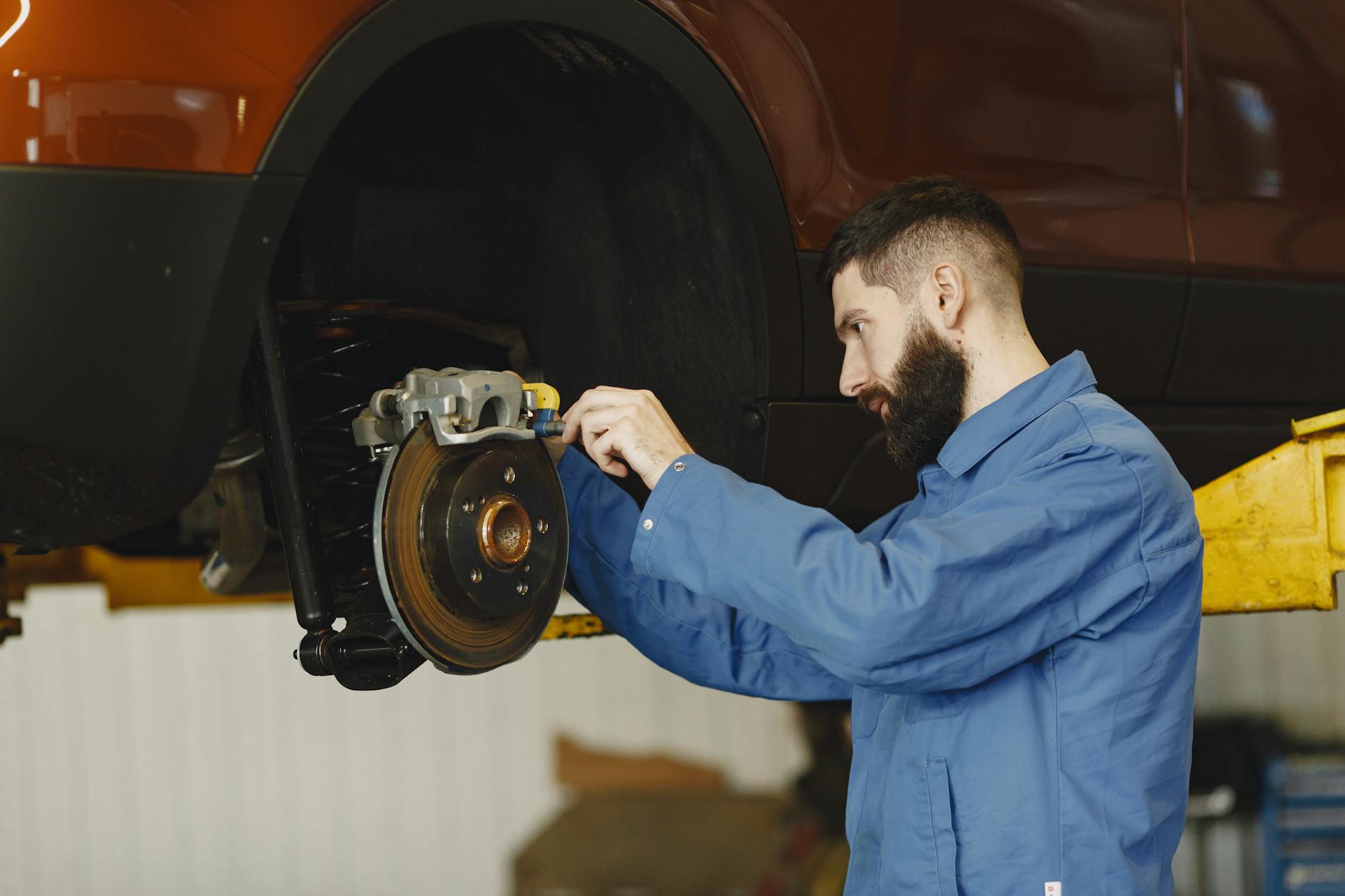
I always start by using my brake caliper compression tool to carefully push the piston back into the caliper housing. I’ve found that rotating the piston while applying pressure works best for the Nissan X-Trail, as it has a screw-type design. This step is crucial to create enough clearance for the new, thicker brake pads.
Fitting New Brake Pads
I begin installing the new brake pads by applying a thin layer of brake grease to the backing plates, being extremely careful not to get any on the friction surface. Here’s my checklist for pad installation:
- Apply brake grease to contact points
- Install inner pad (piston side) first
- Ensure anti-rattle clips are properly seated
- Install outer pad with wear indicator properly oriented
- Verify both pads move freely in the bracket
Reattaching the Caliper
When reattaching the caliper, I position it carefully over the new pads and bracket. It’s essential to avoid twisting or stretching the brake hose during this process. The caliper should slide smoothly into place without forcing it.
Torque Specifications
Here’s my torque reference table for the X-Trail rear brake assembly:
| Component | Torque Specification |
|---|---|
| Caliper Bolts | 85-95 Nm |
| Guide Pin Bolts | 28-32 Nm |
| Wheel Nuts | 108-127 Nm |
Wheel Reinstallation
I always follow a specific sequence when reinstalling the wheel:
- Clean the mating surfaces between wheel and hub
- Position wheel carefully onto hub
- Install wheel nuts by hand initially
- Lower vehicle until wheels touch ground
- Tighten nuts in star pattern to specification
I make sure to verify the wheel sits flush against the hub face. Any gap here could indicate debris or improper mounting. When tightening the wheel nuts, I use a torque wrench and follow a star pattern to ensure even pressure distribution.
Now that the installation is complete, we’ll move on to testing the brakes and performing the necessary break-in procedure to ensure optimal performance and longevity of the new pads.
Testing and Break-in
Brake Pedal Adjustment
I always start by pumping the brake pedal several times until it becomes firm. This crucial step helps position the pads correctly against the rotors and rebuilds proper brake fluid pressure. After installing new brake pads on my Nissan X-Trail, I’ve found that it typically takes 8-10 pumps to achieve the right pedal feel.
Here’s my checklist for proper pedal adjustment:
- Push brake pedal slowly 8-10 times
- Check for proper pedal height
- Verify pedal firmness
- Listen for any unusual sounds
- Ensure pedal doesn’t sink to the floor
Initial Brake Testing
Before taking my X-Trail on the road, I perform several stationary tests. Here’s my testing sequence table:
| Test Type | Procedure | What to Check |
|---|---|---|
| Static Test | Engine running, foot on brake | Pedal stays firm |
| Park Test | Gentle reverse and forward | No unusual noises |
| Low-speed Test | 5-10 mph in empty area | Even braking feel |
| Response Test | Light brake applications | Immediate response |
Break-in Procedure
I’ve developed a specific break-in procedure that ensures optimal performance and longevity of my new brake pads:
- Find a straight, empty road where I can safely perform the procedure
- Accelerate to 30 mph
- Apply moderate brake pressure to slow to 5 mph
- Immediately accelerate back to 30 mph
- Repeat this process 6-8 times
This method helps transfer an even layer of pad material onto the rotor surface. I make sure to avoid coming to a complete stop during this process, as it can create uneven pad deposits.
Between each braking cycle, I drive for about 30 seconds without touching the brakes to allow proper cooling. I’ve found that rushing this process can lead to glazing of the new pads, which reduces their effectiveness.
Important tips I always follow during break-in:
- Never drag the brakes
- Avoid panic stops
- Keep moderate speeds
- Allow cooling periods
- Complete all cycles in one session
After the break-in procedure, I let the brakes cool completely for at least 15 minutes before normal driving. During the first 200 miles, I make sure to avoid heavy braking when possible, giving the pads time to fully seat themselves.
After walking through this brake pad replacement process on my Nissan X-Trail, I’ve found that with the right tools and careful attention to safety measures, it’s a manageable DIY task. I’ve covered everything from accessing the brake assembly to properly installing new pads and performing essential break-in procedures.
I strongly recommend taking your time with this job and double-checking all connections before hitting the road. Remember to test the brakes in a safe area before regular driving, and follow the break-in procedure to ensure optimal performance. If you’re ever unsure about any step, don’t hesitate to consult a professional mechanic – safety should always come first when working on brake systems.